Ethereum Stuck at $2,316: Institutional Bids Meet Whale Sell Walls as TD Sequential Flashes Red
Ethereum has spent nearly a month pinned between $2,316 and $2,400. Jane Street added $82M in ETH exposure, but whale sell walls and surging Binance reserves signal a contested setup with $1,700 downside risk on the table.
Ethereum Stuck at $2,316: Institutional Bids Meet Whale Sell Walls as TD Sequential Flashes Red
Ethereum has spent nearly a month pinned between $2,316 and $2,400, unable to break higher despite record staking participation and fresh institutional buying. The tension between accumulation signals and distribution data has created one of the more analytically contested setups ETH has seen in 2026.
The Tug of War in Plain Numbers
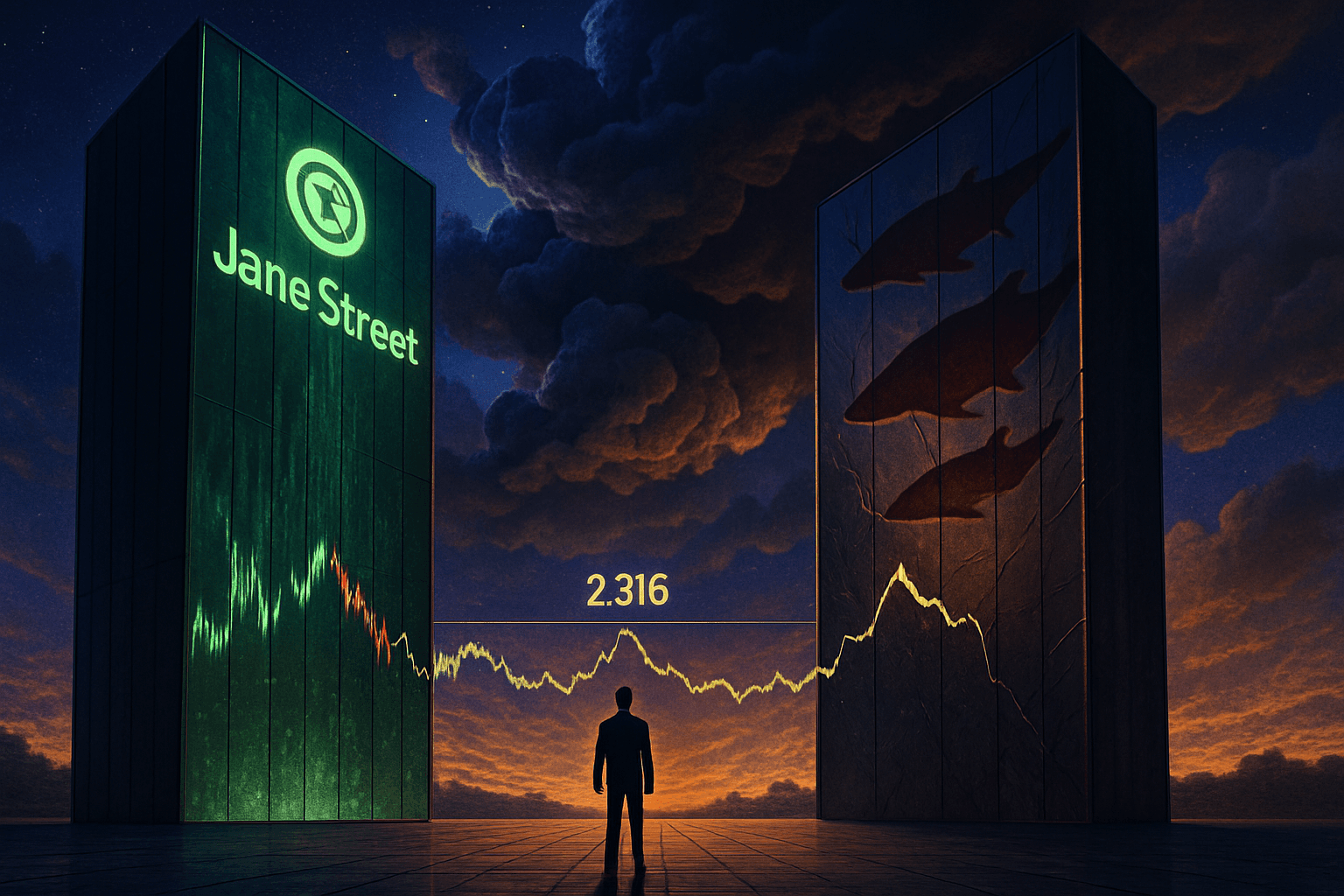
Jane Street added roughly $82 million in ETH exposure this week, keeping institutional demand visible in the order book. Whale sell walls sitting at $2,320 and $2,400 have absorbed every recovery attempt, leaving price action flat. On-chain profit realization metrics hit their strongest reading in weeks, suggesting holders who accumulated at lower levels are using this range to exit, not add.
The exchange inflow picture is blunt. Binance ETH reserves jumped from 3.36 million to 3.84 million ETH between May 5 and May 10, a net addition of 480,000 ETH to exchange custody in five days. Historically, surges of that magnitude into exchange wallets precede selling pressure, not accumulation. When coins move to exchanges, the intent is usually to sell.
Compounding the bearish read, the TD Sequential indicator, a price exhaustion tool that has correctly identified several major Ethereum inflection points over the past two years, flashed its first sell signal in months. Analysts tracking the signal warn of potential downside to $1,700, which would represent a roughly 27% decline from current levels. The $2,200 level is the first meaningful support below the current range.
Bulls Have a Case Too
The bearish data does not exist in a vacuum. Ethereum staking participation is at an all-time high, and while that alone has not translated into price appreciation, it does reduce the liquid supply available for selling. Every ETH locked in a validator is ETH that cannot hit a Binance order book. The structural argument for higher prices remains intact: less liquid supply plus steady institutional demand should eventually force price higher.
Analyst Tice, writing on technical setups this week, argued that a rally to $4,000 is "bound to happen" based on chart structure and said he was personally accumulating ETH at current levels. That is a minority view right now, but the technical case rests on a longer time frame than the exchange inflow data, which is inherently short-term in nature.
A dormant whale moving $157 million in ETH after nine years of inactivity added another layer of ambiguity. Dormant wallet movements can signal either distribution by long-term holders or simply wallet consolidation. Without additional context on where those funds moved, the signal is inconclusive.
Protocol Developments Running in the Background
While price stagnates, Ethereum's development pipeline has not. The network recently introduced a clear signing standard designed to make transaction details human-readable before users approve them, a direct response to the phishing and blind-signing exploits that have drained wallets across the space. Vitalik Buterin demonstrated the technology practically by moving 50.25 ETH, worth approximately $113,000, through Privacy Pools, the zero-knowledge proof protocol designed to let users prove transaction compliance without revealing counterparties.
Ethereum core developers are also actively considering changes to the staking reward model aimed at controlling issuance and improving the long-term price outlook. The details are still being debated, but any reduction in staking yields would alter the economics for liquid staking protocols like Lido, which has already published a blueprint for integrating liquid staking into ETH ETF structures.
Tokenized ETFs built on Ethereum rails crossed $430 million in on-chain market cap this month. Ondo Finance's IVVon product surged 150% over the past 30 days, reflecting genuine demand for tokenized real-world assets. That growth is a net positive for Ethereum's utility argument, though it raises a secondary question: if institutional capital is flowing into tokenized wrappers rather than ETH directly, it may not generate the same demand pressure on spot ETH that a direct purchase would.
Regulatory Overhang and Corporate Pain
The Crypto CLARITY Act cleared a Senate committee markup last week, but the vote exposed a partisan fault line that complicates any near-term resolution. Only two Democrats supported the measure in committee. Senator Elizabeth Warren called the bill a threat to economic stability, arguing it would loosen oversight at exactly the wrong moment. Supporters counter that the greater risk is continued regulatory ambiguity, which pushes activity offshore and leaves U.S. investors without clear protections.
The legislative uncertainty has real corporate consequences. Bit Digital reported a Q1 2026 net loss of $146.7 million, with $121.1 million of that driven by mark-to-market losses on ETH holdings. Revenue fell 14% year over year. The losses are unrealized and reflect price volatility rather than any fundamental failure of the network, but they illustrate the balance sheet risk that comes with holding large ETH positions through a prolonged consolidation.
What the Setup Implies
Ethereum is not in crisis. The network is processing transactions, staking is healthy, and real institutions are buying. The current price structure is genuinely contested, though. Exchange inflows and profit realization data favor the bears in the near term. Record staking and institutional accumulation favor the bulls over a longer horizon.
The $2,400 level is the line that matters. A sustained close above it, with declining exchange reserves, would shift the on-chain narrative decisively toward accumulation. Until that happens, the $1,700 downside scenario flagged by the TD Sequential signal stays on the table. The next few weeks of exchange flow data will be more informative than any single price candle.