Crypto Reddit Roundup: Mixed Signals on Markets, DeFi, and Regulation as April 2026 Closes
Bitcoin's $80K level, DoorDash stablecoin payouts across 40 countries, Nouns DAO ending daily auctions after a 10-voter quorum, and CLARITY Act lobbying dominated Reddit's crypto discussions on April 24, 2026.
Crypto Reddit Roundup: Mixed Signals on Markets, DeFi, and Regulation as April 2026 Closes
Reddit's largest crypto communities spent April 24, 2026 wrestling with a market that feels simultaneously promising and precarious, with discussions spanning stablecoin launches, DAO governance failures, DoorDash's stablecoin payroll rollout, and a lobbying push to advance the CLARITY Act through a stalled Senate.
Market Sentiment: Strong Fundamentals, Fragile Confidence
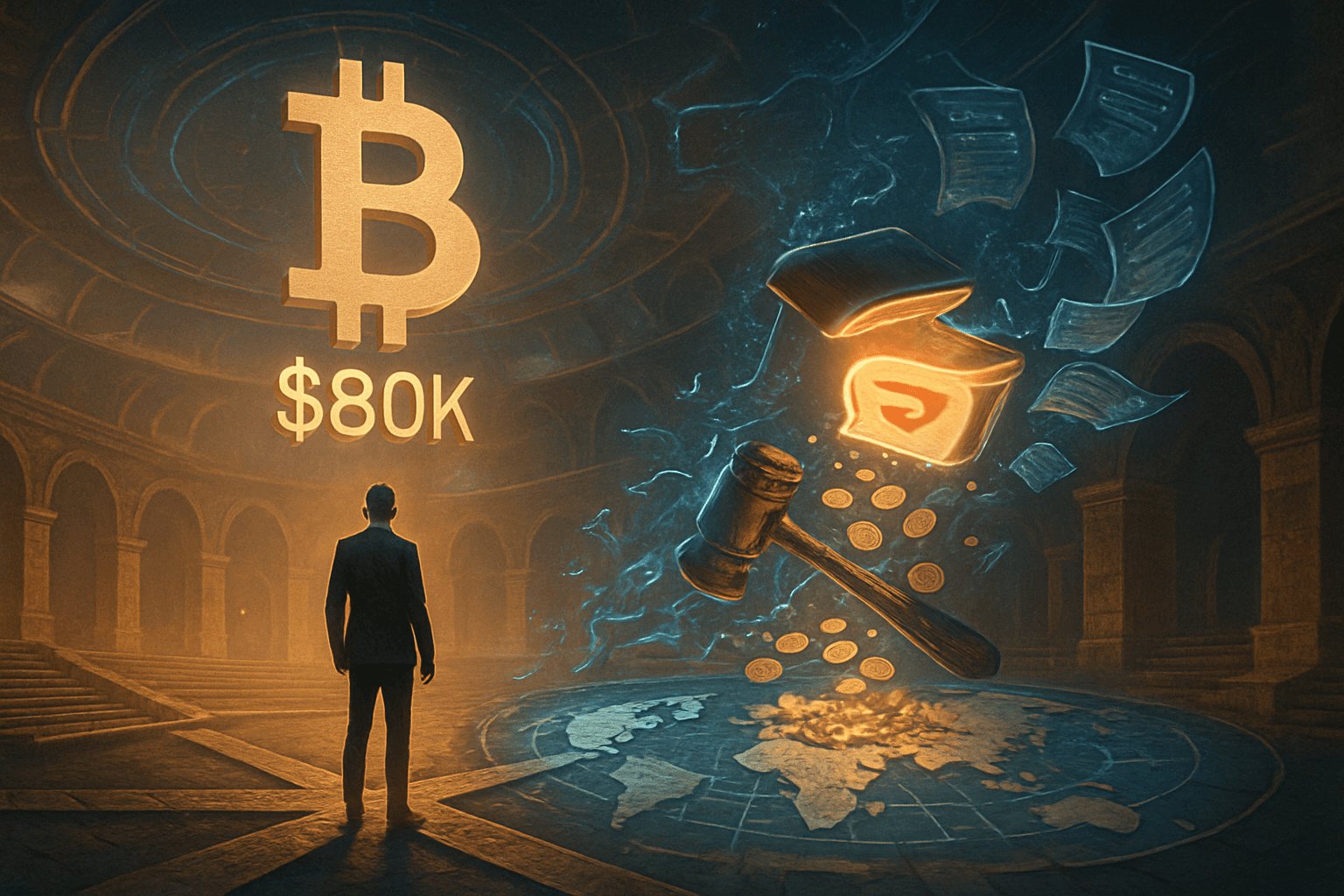
Bitcoin's $80,000 level dominated market conversation across r/CryptoMarkets and r/Bitcoin, with traders treating it as both a psychological anchor and a stress test. One user in the April 24 daily discussion thread captured the mood precisely: "BTC pushing back towards 80k, ETF inflows look solid but at the same time, every move still feels news-driven. One headline and everything flips."
That fragility is the dominant theme. Of 40 posts analyzed across the major subreddits, 16 carried bullish or very bullish sentiment, 13 were bearish or very bearish, and 11 were neutral. The split reflects a market without clear directional conviction. Price targets mentioned in threads ranged from $60,000 on the downside to $300,000 on the high end, a spread that signals genuine disagreement rather than coordinated optimism.
Traders are also noticing a structural shift in how altcoins behave. "The market isn't trending like before," one r/CryptoMarkets user wrote. "It's not moving together anymore. Only a few coins pump at a time, the rest just chop sideways." This selective rotation is typical of mid-cycle uncertainty, where liquidity concentrates in high-conviction plays rather than flowing broadly across the market.
A separate thread on r/CryptoMarkets drew significant engagement around bad trading habits, with one user pushing back on the HODL doctrine directly: "Never sell, just HODL forever. It sounds disciplined but it's actually just lazy thinking dressed up as conviction." The thread reflected broader frustration with 2026 trading conditions, where passive strategies have underperformed for many retail participants.
Stablecoins in the Spotlight: DoorDash Goes Live, DigiDollar Launches
The most concrete adoption story of the day came from r/CryptoCurrency, where users discussed DoorDash's rollout of stablecoin payouts to gig workers across 40 countries. The move positions stablecoins as a payroll infrastructure layer rather than a speculative asset, a distinction that matters for regulatory optics and mainstream credibility. The comparison to PayPal's crypto integration in 2020-2021 is apt, but DoorDash's use case is more operationally specific: cross-border payments to contractors who may lack reliable access to traditional banking.
DigiByte's DigiDollar announcement generated a noisier reception. The project's promotional framing, "Forget the middlemen. Forget the sluggish network fees and speeds," drew enthusiasm from DigiByte loyalists and skepticism from users who questioned whether the stablecoin addresses a genuine gap or simply repackages existing DeFi infrastructure with new branding. DigiDollar's actual differentiation from established stablecoins like USDC or DAI was not clearly articulated in community threads, and that vagueness fed the skeptics.
Nouns DAO and the Ongoing Governance Problem
Nouns DAO's decision to end its daily NFT auctions, following a governance vote involving just 10 participants, surfaced on r/CryptoCurrency and quickly became a proxy debate for the state of decentralized governance broadly. The DAO had run daily auctions since its 2021 launch. Critics pointed to the low participation as evidence that most DAO token holders are either disengaged or effectively disenfranchised by the complexity of governance processes.
The Justin Sun versus World Liberty Financial (WLFI) dispute added fuel to that fire on r/defi. WLFI is a DeFi protocol with ties to the Trump family's crypto ventures. Sun's lawsuit against the project prompted one r/defi user to state bluntly: "Half of DeFi is still just political theater with better branding, and that's facts." Whether or not that characterization is fair to the broader DeFi space, it reflects a real credibility problem when high-profile governance conflicts play out in courtrooms rather than on-chain.
CLARITY Act Lobbying Intensifies
On the regulatory front, r/CryptoCurrency threads highlighted a coordinated push by over 100 crypto companies urging U.S. senators to advance the CLARITY Act before the legislative window closes. The Act would establish clearer jurisdictional boundaries between the SEC and CFTC for digital assets, a distinction that has created compliance uncertainty for years. One user summarized the stakes: "Over 100 crypto companies are pushing US senators to move faster on the CLARITY Act, which would set clearer rules for the industry."
The lobbying effort reflects an industry that has learned from the 2022-2024 regulatory chaos. Rather than waiting for enforcement actions to define the rules, major players are attempting to shape legislation proactively. Senate delays remain the primary obstacle, with disagreements persisting over how to classify DeFi protocols and whether algorithmic stablecoins should face stricter oversight than fiat-backed alternatives.
Microsoft's M12 Backs Coinbase Base AI Tool
Microsoft's venture unit M12 confirmed support for Dreamspace, an AI application builder operating on Coinbase's Base layer-2 network. Base is an Ethereum L2 built on the OP Stack, designed to lower transaction costs and increase throughput for consumer-facing applications. The M12 backing signals that institutional capital is willing to fund infrastructure at the intersection of AI and onchain tooling, even as the broader market remains choppy.
The development generated cautious optimism in community threads, though some users raised concerns about centralization. Coinbase controls the sequencer for Base, meaning transaction ordering is not yet decentralized, a technical limitation that matters for applications requiring censorship resistance.
Infrastructure Upgrades and Staking Debates
Polkadot's People Chain upgrade to v2.22 reduced block times to two seconds, a technical improvement aimed at making the network more competitive for real-time applications. The upgrade drew attention on r/Polkadot but minimal crossover discussion in the broader market communities, which is itself a data point about Polkadot's current mindshare relative to Ethereum and Solana.
On r/Solana, users debated staking options beyond the Seeker phone's native offering, which yields approximately 6% APY. The conversation mirrored a parallel thread on r/Bitcoin where users pushed back on staking enthusiasm more broadly, arguing that delegating custody of assets to validators introduces counterparty risk that the yield rarely compensates adequately.
What the Noise Signals
Taken together, April 24's Reddit discussions paint a market in transition rather than crisis. Institutional infrastructure is being built, traditional companies are integrating stablecoin payments, and regulatory lobbying is becoming more sophisticated. Retail confidence is fractured, governance in major DAOs remains brittle, and the market's sensitivity to news flow makes positioning difficult to hold with conviction. The gap between structural progress at the infrastructure layer and the sentiment volatility visible in daily community discussions is, for now, the defining tension in crypto's 2026 chapter.