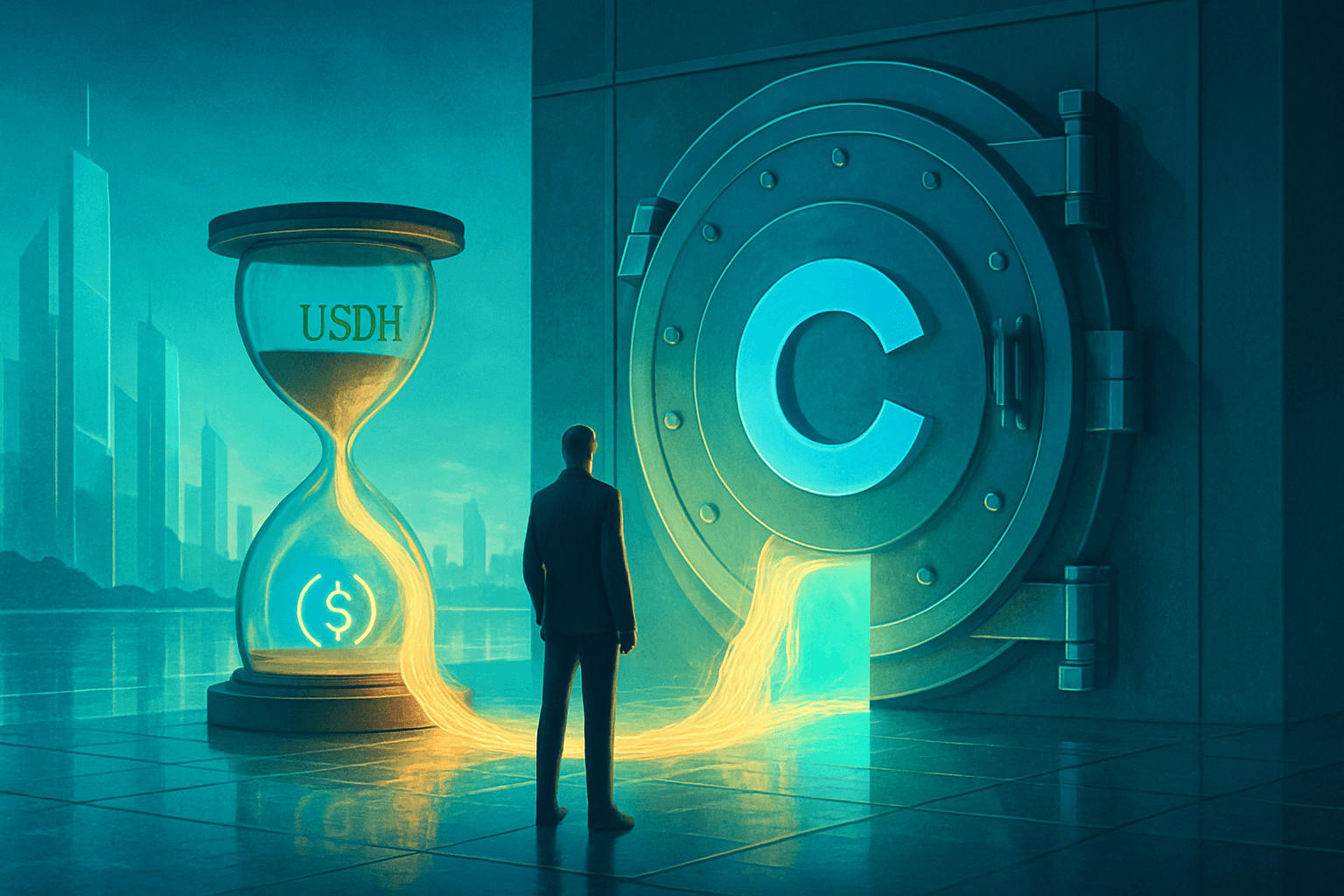
Coinbase Takes Over USDC Treasury on Hyperliquid as USDH Sunsets
Coinbase has become the official USDC treasury deployer on Hyperliquid, replacing the native USDH stablecoin under a new partnership with Native Markets. The transition reflects broader industry trends toward regulated stablecoins and institutional-grade infrastructure.
Coinbase Takes Over USDC Treasury on Hyperliquid as USDH Sunsets
Coinbase has become the official USDC treasury deployer on Hyperliquid, replacing the native USDH stablecoin under a new partnership with Native Markets, the operator of Hyperliquid's infrastructure. Native Markets has granted Coinbase the right to purchase USDH brand assets and will transition USDH infrastructure toward USDC through a treasury-sharing model. USDH, which served as Hyperliquid's primary quote asset, will be sunset as the platform standardizes on USDC.
The shift to USDC carries regulatory and operational advantages. USDC is issued by Circle, a regulated stablecoin provider with explicit approval from regulators in multiple jurisdictions. By adopting USDC, Hyperliquid reduces exposure to regulatory uncertainty and gains access to institutional-grade infrastructure. Coinbase's treasury role adds another layer of institutional credibility, as the exchange is subject to U.S. regulatory oversight and maintains significant reserves to back stablecoin operations.
Coinbase's expanded role reflects the exchange's broader strategy to deepen integration with major blockchain platforms. The move positions Coinbase as a critical infrastructure provider beyond its core exchange business, managing treasury operations for one of the largest decentralized perpetual futures platforms. Hyperliquid has emerged as a significant trading venue with substantial volume and a growing user base seeking alternatives to centralized derivatives exchanges.
However, the transition raises centralization concerns. USDH holders will need to migrate their holdings, and the sunset of a native stablecoin removes a unique economic component from Hyperliquid's ecosystem. Some community members may view the consolidation as a loss of platform independence, particularly given Coinbase's outsized influence in DeFi infrastructure. Concentrating stablecoin treasury management with a single entity increases systemic risk if operational or regulatory issues emerge.
This migration reflects a broader industry trend toward standardization around established players. As DeFi platforms mature and face greater regulatory scrutiny, many are abandoning proprietary stablecoins in favor of regulated alternatives like USDC, USDT, or DAI. The move underscores Coinbase's strategic positioning: while competitors focus on trading volume, Coinbase is embedding itself deeper into the infrastructure layer, where it can capture recurring revenue and influence platform dynamics.
For Hyperliquid users, the transition should be largely seamless. USDC offers deeper liquidity than USDH and integrates with a broader range of DeFi protocols, potentially improving capital efficiency. For Coinbase, the role expands its footprint in a high-growth segment of decentralized finance without requiring it to launch a new product or take on additional regulatory burden. The partnership demonstrates how centralized entities can embed themselves into decentralized platforms through infrastructure roles rather than direct ownership.