Coinbase Backs CLARITY Act as Solana Eyes $106 and Warns on Quantum Risk
Coinbase has backed the CLARITY Act after final rewards language was released, clearing a major legislative bottleneck. Solana meanwhile launched Pay.sh with Google Cloud and co-founder Yakovenko warned AI could threaten post-quantum cryptography.
Coinbase Backs CLARITY Act as Solana Eyes $106 and Warns on Quantum Risk
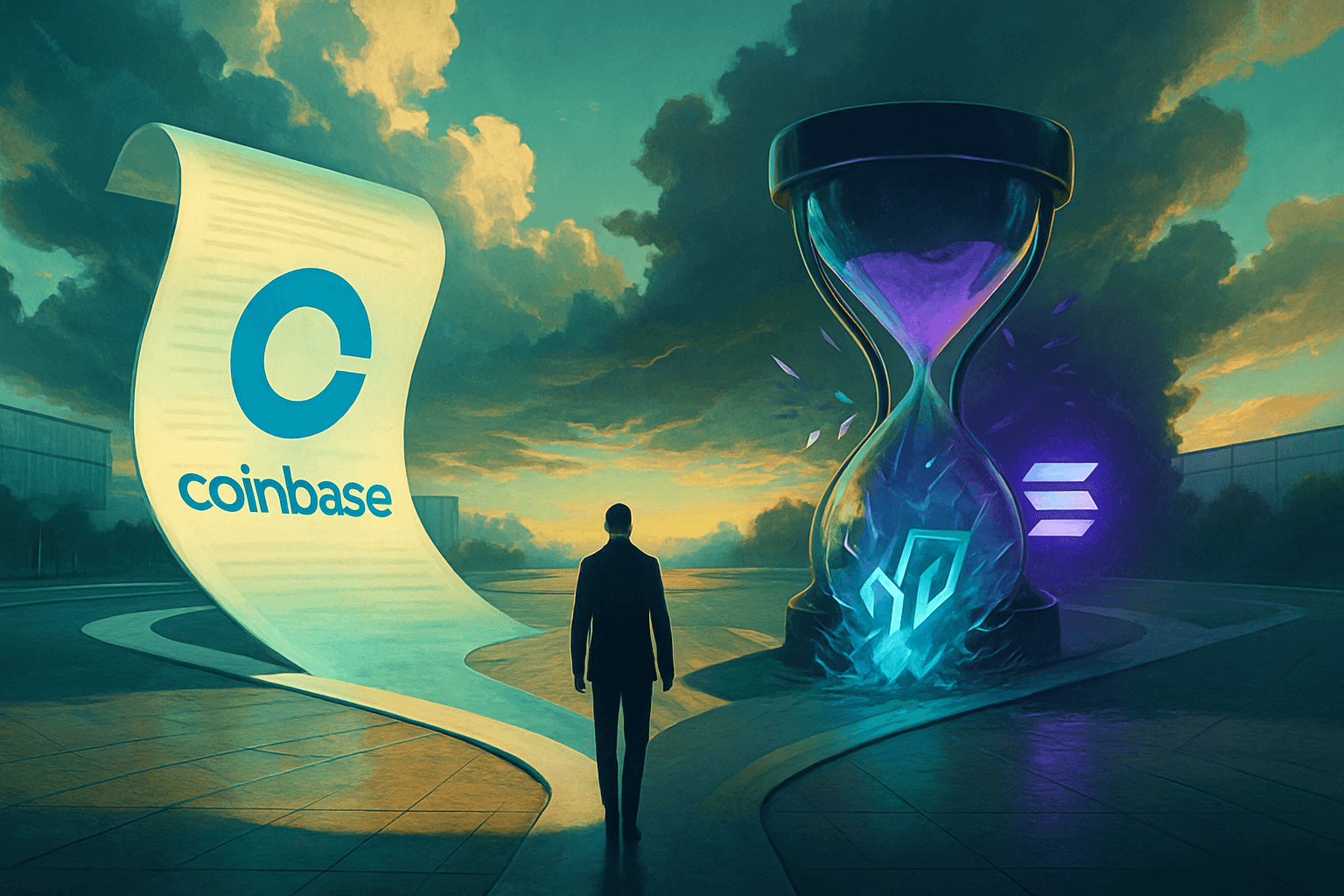
Coinbase has signaled support for the CLARITY Act following the public release of final rewards language in the bill, removing one of the most stubborn political obstacles blocking US crypto market structure legislation. The development arrives alongside a cluster of Solana-related headlines this week, from a Google Cloud infrastructure partnership to a warning from the network's founder about artificial intelligence and cryptographic security.
CLARITY Act Clears a Key Bottleneck
The rewards language dispute had been a sticking point for months, with industry participants divided over how staking and validator rewards would be classified and regulated under the bill. With the final text now public, Coinbase has indicated the compromise is workable. As the largest US-regulated crypto trading platform by volume, Coinbase's public endorsement signals to lawmakers that the industry's most compliance-focused players can operate within the proposed framework.
The CLARITY Act is part of a broader congressional push to define which digital assets qualify as commodities versus securities, a distinction that determines whether the CFTC or SEC holds primary oversight. Resolving the rewards language question matters because staking income touches millions of retail holders and institutional validators alike. Without clear rules, exchanges and protocols have faced legal exposure simply for offering yield products to US customers.
Not everyone is satisfied. Some industry stakeholders argue the compromise language still places unnecessary restrictions on innovation, particularly for newer reward mechanisms tied to decentralized finance protocols. Geopolitical headwinds add another layer of uncertainty: the US Treasury Secretary this week said he expects oil prices to fall following recent conflict resolution, but Iran's ongoing power consolidation amid 2026 leadership uncertainty could reignite regional tensions and push energy markets in the opposite direction. Macro volatility has historically correlated with crypto drawdowns, and a renewed risk-off environment could mute any legislative tailwind.
Solana Foundation Launches Pay.sh With Google Cloud
The Solana Foundation announced Pay.sh this week, a gateway service built in collaboration with Google Cloud that connects autonomous AI agents to enterprise payment infrastructure. The service targets businesses looking to integrate programmable, agent-driven transactions without building custom blockchain middleware from scratch. According to the Solana Foundation's official announcement, Pay.sh is designed to make Solana's high-throughput, low-fee architecture accessible to enterprise developers already inside the Google Cloud environment.
The partnership positions Solana as infrastructure for AI-native commerce rather than purely a retail trading or DeFi chain. The immediate retail impact may be limited given the enterprise focus, but the long-term implication is that Solana could become a settlement layer for machine-to-machine payments at scale.
Separately, a senior Solana Foundation executive declared this week that the rivalry between Solana and Ripple's XRP is giving way to cross-chain collaboration. "The war is over," the executive said, pointing to XRP integration as evidence that major blockchain networks are shifting from competition toward interoperability. That framing cuts against the "altcoin wars" narrative that defined much of crypto's earlier discourse, and it reflects a broader industry recognition that fragmented liquidity and siloed ecosystems hurt all participants.
Yakovenko Raises Post-Quantum Alarm
Solana co-founder Anatoly Yakovenko added a longer-term concern to the week's conversation, warning that advances in artificial intelligence could eventually break post-quantum cryptography (PQC) schemes. PQC refers to cryptographic algorithms designed to resist attacks from quantum computers, which can theoretically defeat the elliptic curve cryptography that secures most blockchain networks today. Yakovenko's warning suggests the threat model may be more complex than previously assumed: even next-generation cryptographic defenses could be vulnerable if AI systems develop the capability to find weaknesses faster than human researchers can patch them.
The concern is technically valid but not an immediate crisis. No publicly known AI system is close to breaking production PQC implementations, and the cryptographic research community has been working on standardized PQC algorithms for years. Still, Yakovenko's comments are a reminder that blockchain security assumptions are not static, and networks that fail to build upgrade paths into their architecture could face existential challenges on longer time horizons.
SOL Sits at a Historically Significant Support Level
SOL is currently trading around $82.50, inside the $80 to $85 support zone that preceded a 2,200% rally in a previous cycle. Technical analysts are watching $106 as the key breakout level that would confirm renewed bullish momentum. The confluence of regulatory progress, enterprise partnerships, and cross-chain narrative shifts gives bulls a credible story, but the zone has also attracted sellers in recent sessions. A failure to hold $80 would likely accelerate selling pressure toward lower support levels.
The broader picture for crypto regulation is cautiously constructive. Coinbase's endorsement of the CLARITY Act compromise, if it translates into legislative momentum, would give the industry its clearest US regulatory framework to date. Combined with Solana's infrastructure moves and the gradual normalization of cross-chain cooperation, the structural conditions for a sustained recovery are building, even if the macro environment and geopolitical risks remain capable of disrupting the timeline.