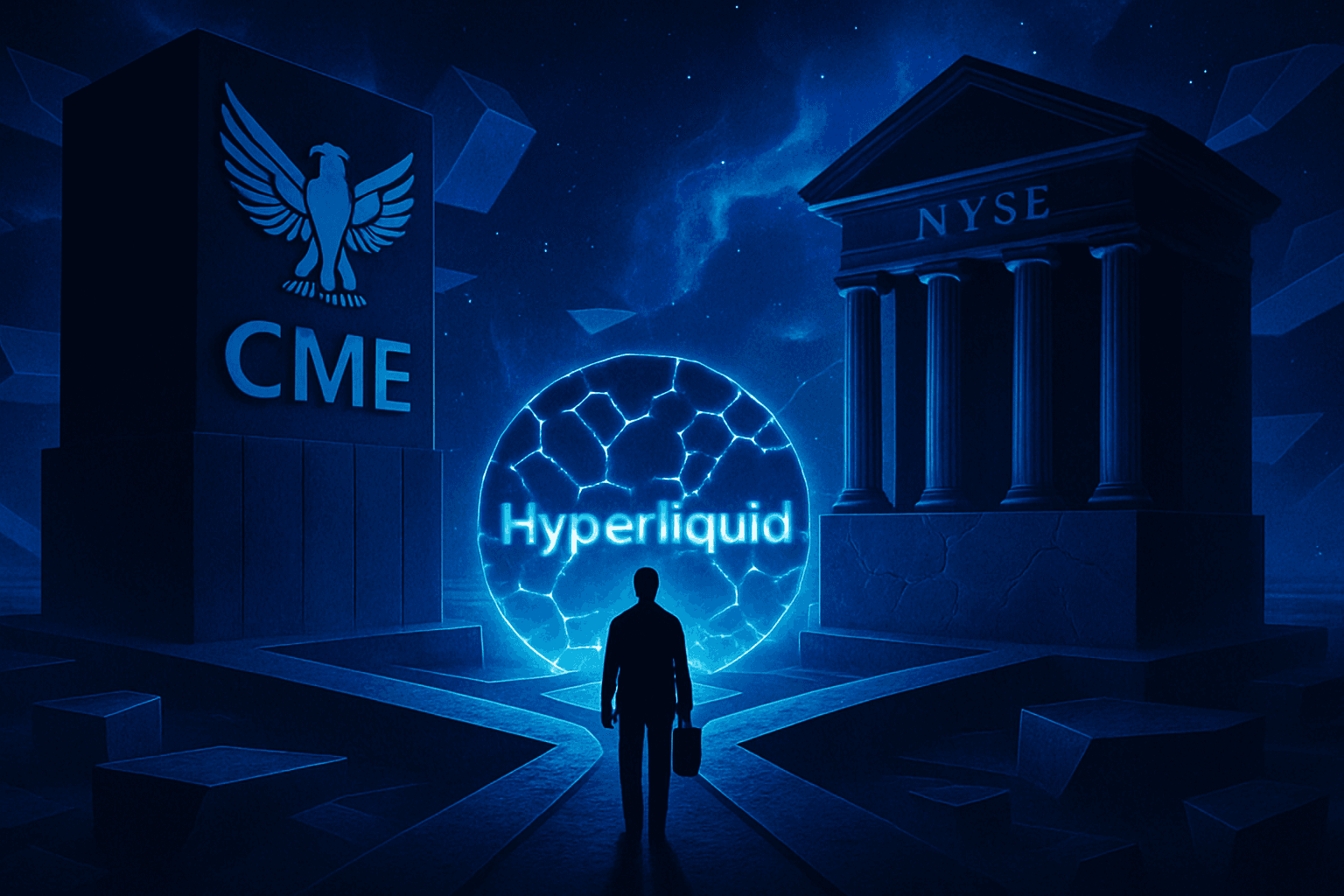
CME and NYSE Call for Hyperliquid Regulatory Oversight
CME Group and Intercontinental Exchange are urging U.S. regulators to establish formal oversight of Hyperliquid, a decentralized perpetual futures exchange, citing market manipulation and sanctions evasion concerns. The push signals coordinated institutional pressure from two of the world's...
CME and NYSE Call for Hyperliquid Regulatory Oversight
CME Group and Intercontinental Exchange (ICE), parent company of the New York Stock Exchange, are urging U.S. regulators to establish formal oversight of Hyperliquid, a decentralized perpetual futures exchange. The two traditional finance giants cited market manipulation and sanctions evasion as primary concerns, escalating institutional scrutiny of crypto derivatives platforms operating outside conventional regulatory frameworks.
Hyperliquid has emerged as one of the largest decentralized perpetual futures platforms, with daily trading volume reaching approximately $887 million as of mid-May 2026. The HYPE token briefly rallied near $44 following reports of regulatory pressure before settling around $43.61. The push signals coordinated institutional pressure from two of the world's largest derivatives and equities operators, both with direct competitive interests in crypto derivatives markets.
The regulatory concerns center on Hyperliquid's operational structure. The platform operates a hybrid model combining decentralized trading with a centralized vault called HLP, which acts as the counterparty to traders. This structure has drawn criticism from on-chain analysts, including researcher ZachXBT, who flagged potential conflicts of interest in how protocol revenue is distributed based on trader losses. Unlike traditional futures exchanges where clearing houses maintain strict capital requirements, Hyperliquid's vault model creates direct financial incentives that some observers argue could enable market manipulation.
The sanctions evasion concern reflects broader regulatory anxiety about decentralized platforms' ability to enforce geopolitical restrictions. Unlike centralized exchanges that implement Know Your Customer (KYC) procedures and geographic blocking, decentralized protocols operate on permissionless blockchains where enforcement depends on indirect mechanisms. Regulators worry that crypto derivatives platforms could provide access to sanctioned entities or individuals, particularly given the platform's global reach and lack of traditional compliance infrastructure.
The regulatory pressure faces significant practical obstacles. Hyperliquid operates as a decentralized protocol with no single controlling entity, making traditional regulatory jurisdiction unclear. Enforcement against a decentralized platform is substantially more difficult than against a centralized exchange with a corporate entity and bank accounts. The token's price resilience following the regulatory announcement suggests market participants may view the concerns as difficult to enforce. Additionally, CME and NYSE's involvement invites skepticism about their motivations, as both have competitive reasons to restrict crypto derivatives platforms that siphon trading volume from their own offerings.
The broader pattern reflects a strategic divide in crypto regulation. Traditional finance incumbents increasingly call for regulatory restrictions on decentralized platforms, framing these calls in terms of systemic risk and consumer protection. Decentralized finance advocates counter that permissionless derivatives platforms provide necessary alternatives to centralized exchanges, reduce counterparty risk, and serve users in jurisdictions with limited access to traditional derivatives markets. Regulators face pressure from both sides: institutional players demanding oversight and enforcement, and the crypto industry arguing that heavy-handed regulation would stifle innovation.
The outcome of CME and NYSE's regulatory push remains uncertain. The SEC and CFTC have historically struggled to regulate decentralized platforms, partly because regulatory authority over unregistered derivatives exchanges is contested between agencies and partly because enforcement mechanisms are limited. Whether U.S. regulators will attempt to impose oversight on Hyperliquid or focus on restricting domestic access through financial system controls depends on how agencies interpret their jurisdiction over decentralized protocols.