China Draws a Hard Line on Tokenized Assets as Seven Agencies Launch Sweeping Crypto Clampdown
China issues its broadest crypto ban since 2021, outlawing RWA tokenization and tightening enforcement across all digital asset activity.
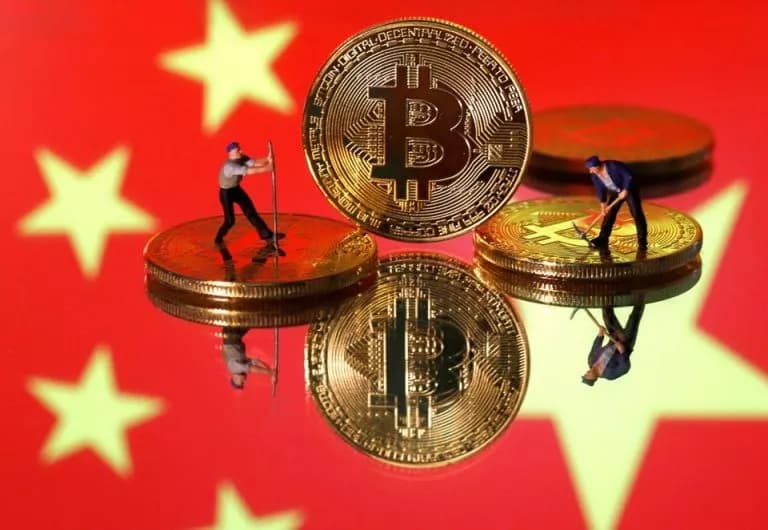
China has escalated its campaign against digital assets with its most sweeping enforcement action in four years, targeting not only cryptocurrencies but also the fast-growing market for tokenized real-world assets. In a coordinated warning issued by seven major financial industry associations, regulators declared that no activity involving crypto or RWA tokenization is permitted within mainland China, marking the first time authorities have explicitly outlawed the tokenization of real-world assets.
The announcement, published on December 5, spans the country’s banking, securities, funds, futures, payments, listed companies and internet finance sectors. The breadth of the coalition underscores the scale of Beijing’s concern. Regulators insisted that stablecoins, mining operations, airdrops and all forms of token issuance remain illegal. They also stressed that domestic institutions and individuals cannot participate in RWA tokenization, regardless of whether the activity is administered onshore or through offshore entities employing staff based in China.
Analysts immediately drew parallels to September 24, 2021, the last time such an expansive regulatory front was mobilized. That action dismantled China’s once-dominant crypto ecosystem, forcing exchanges to close and erasing the country’s leadership in global Bitcoin mining. What distinguishes this new crackdown, however, is the decision to include tokenized real-world assets—an area that has surged internationally, with global RWA markets now exceeding thirty billion dollars. High-profile initiatives such as BlackRock’s BUIDL fund, which has gained traction on major exchanges, illustrate the momentum regulators are seeking to contain.
Beijing’s concern centers on capital control risks. By tokenizing domestic assets and transferring them to offshore wallets, individuals could circumvent the traditional financial system and convert their wealth into foreign currency. Officials fear this mechanism could create a discreet pipeline for capital flight, a longstanding red line for Chinese policymakers. The statement made clear that RWAs, like other digital assets, lack legal standing in the mainland and cannot circulate or be used for financing activities.
The crackdown follows a November 28 meeting led by the People’s Bank of China, during which senior officials classified stablecoins as virtual currencies subject to prosecution. Enforcement concerns were reinforced by recent statistics showing a thirty-seven percent year-on-year increase in money laundering cases involving digital assets. The new directive lays out what experts have called a “four-layer blockade” designed to quarantine the crypto sector entirely: restrictions on mining, prohibitions on stablecoin payments, dismantling of RWA channels and targeted action against fraudulent schemes.
The warning also draws a firm line between mainland China and Hong Kong’s increasingly open digital asset environment. While Hong Kong continues to advance its licensing framework and host pilots for offshore RWA tokenization, Chinese regulators insist that mainland residents employed by foreign exchanges will still face legal exposure. Instead, the mainland’s preferred digital alternative remains the state-backed e-CNY, which authorities promote as a compliant path for financial innovation.
The announcement ignited widespread debate among young investors, many of whom openly expressed frustration at being sidelined from what they view as generational crypto opportunities. Commentary circulating in Chinese media highlights a growing disconnect between global market trends and domestic policy, particularly as Western jurisdictions move toward formal regulation rather than prohibition. For now, China’s stance signals an unambiguous message: the digital asset sector will be tightly constrained, even as the rest of the world continues to explore its economic potential.