
Bitcoin Hits $70K as Treasury Buybacks Trigger $1.74B Short Squeeze
Bitcoin surged to nearly $70,000 on August 19, 2026, driven by U.S. Treasury bond buyback expansion and pro-crypto policy signals. The rally triggered $1.74 billion in short liquidations and $1.9 billion in total market liquidations, with Ethereum breaking above $2,000 for the first time since...
Bitcoin Hits $70K as Treasury Buybacks Trigger $1.74B Short Squeeze
$1.74 billion in short positions vaporized in 24 hours. That is the cost of betting against Bitcoin on August 19, 2026, as the asset surged to nearly $70,000 on a combination of macro tailwinds and accelerating U.S. pro-crypto policy.
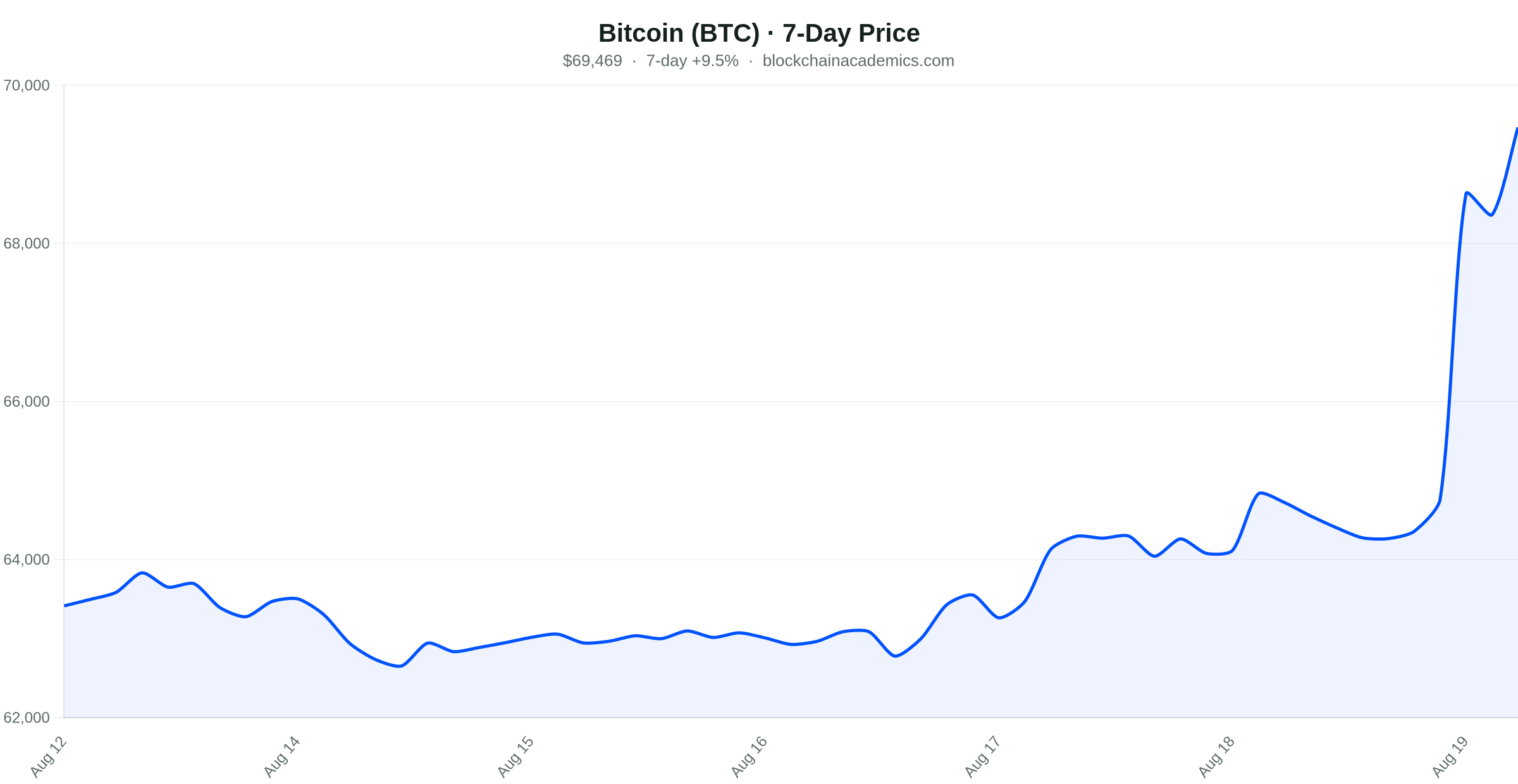
The catalyst was a surprise expansion of U.S. Treasury bond buybacks, which pushed yields lower and redirected capital toward risk assets. Bitcoin jumped roughly 6% on the day, touching highs not seen in recent months. Total market liquidations across crypto reached $1.9 billion, with short sellers absorbing the overwhelming share. Per on-chain data and derivatives tracking, the $1.74 billion short wipeout ranks among the largest single-day short liquidation events on record.
Ethereum joined the move with force. ETH broke above $2,000 for the first time since June 2, posting a 10% gain on the day. Crypto-adjacent equities followed: Strategy climbed 12%, Coinbase gained 9%, and BitMine and Circle both recorded significant single-session advances. The breadth of the rally, spanning spot, derivatives, and equities, signals institutional positioning rather than a purely retail-driven move.
"Bitcoin jumped by roughly 6% earlier today as a surprise expansion of US Treasury bond buybacks sent yields lower and boosted demand for risk assets."
The macro framing matters here. As Standard Chartered flagged earlier this month when the Treasury doubled long-end buybacks to $4 billion, the debasement trade is back. Looser monetary conditions, elevated AI infrastructure spending, and policy signals from Japan are collectively fueling bets on sustained liquidity expansion. Bitcoin, positioned as a fixed-supply hedge, is the direct beneficiary of that thesis.
Policy momentum amplified the move. The Trump administration publicly urged the Senate to pass the CLARITY Act, which would establish clearer regulatory lanes for digital assets, and separately teased additional Bitcoin purchases by the U.S. government. The GENIUS Act, which codifies a federal Bitcoin reserve, has already been signed into law. The White House also highlighted the approval of Bitcoin perpetual futures and ongoing efforts to bring Hyperliquid's derivatives platform into the U.S. regulatory perimeter. That last point sent HYPE surging earlier this week, as we covered when Trump confirmed the CFTC push for Hyperliquid's U.S. entry.
Corporate accumulation continued in parallel. Remixpoint added 9.96 BTC to bring its holdings to 1,501.27 BTC. Strive increased its Bitcoin position by $69 million. Neither figure is enormous in isolation, but both reflect the same institutional playbook: treat Bitcoin as a primary treasury reserve rather than a speculative allocation. BlackRock addressed the broader question of conviction directly.
"Bitcoin's long-term appeal remains intact, according to BlackRock, despite forced liquidations, weaker ETP flows and competition from AI-themed investments."
BlackRock, via statement
On the infrastructure side, Bitcoin.com integrated USDU, the UAE's first central bank-registered dollar stablecoin, into its self-custodial wallet. The move is incremental but directionally significant: regulated stablecoins entering non-custodial wallets expand the addressable market for compliant on-chain dollar exposure, particularly in regions with dollar demand and limited banking access.
Not everything in today's session was constructive. Maya Protocol, a cross-chain liquidity layer, halted operations after a six-bug exploit drained between $1.4 million and $1.7 million in Bitcoin. The attack underscores a persistent vulnerability in cross-chain infrastructure: complexity multiplies attack surface. DeFi security remains the sector's most stubborn unsolved problem, and each exploit chips at the confidence of institutional entrants who view custody and counterparty risk as primary concerns.
Ethereum's exchange balances dropped 10% during the session, a metric that cuts two ways. Self-custody and staking withdrawals from exchanges are typically bullish signals for ETH supply dynamics. But the simultaneous Bitcoin inflow data suggests some rotation: capital moving toward BTC and away from altcoin exposure. Whether ETH's 10% gain today reflects genuine renewed demand or a short-covering bounce inside a broader Bitcoin-led move remains an open question.
The Federal Reserve adds a layer of uncertainty. With the Fed now meeting six times per year and some officials still advocating rate hikes, the macro tailwind from Treasury buybacks could face a countervailing force if inflation data deteriorates. The debasement trade works until the Fed decides it does not.
Scale provides useful context for today's liquidation event. In October 2025, a tariff headline triggered $19 billion in liquidations within 24 hours, with Bitcoin falling from above $120,000 to near $105,000. Today's $1.9 billion event is an order of magnitude smaller, and it ran in the opposite direction, punishing shorts rather than longs. That asymmetry reflects how much positioning has shifted since last year's volatility peak. The crowd is no longer uniformly long and leveraged. A meaningful short base had built up, and today's macro catalyst burned it.
Bitcoin at $70,000 is a recovery, not a record. The question now is whether the policy and macro combination that drove today's move has enough durability to push toward prior highs, or whether the Fed, an unresolved legislative calendar, and DeFi security headlines cap the advance before it gains further momentum.