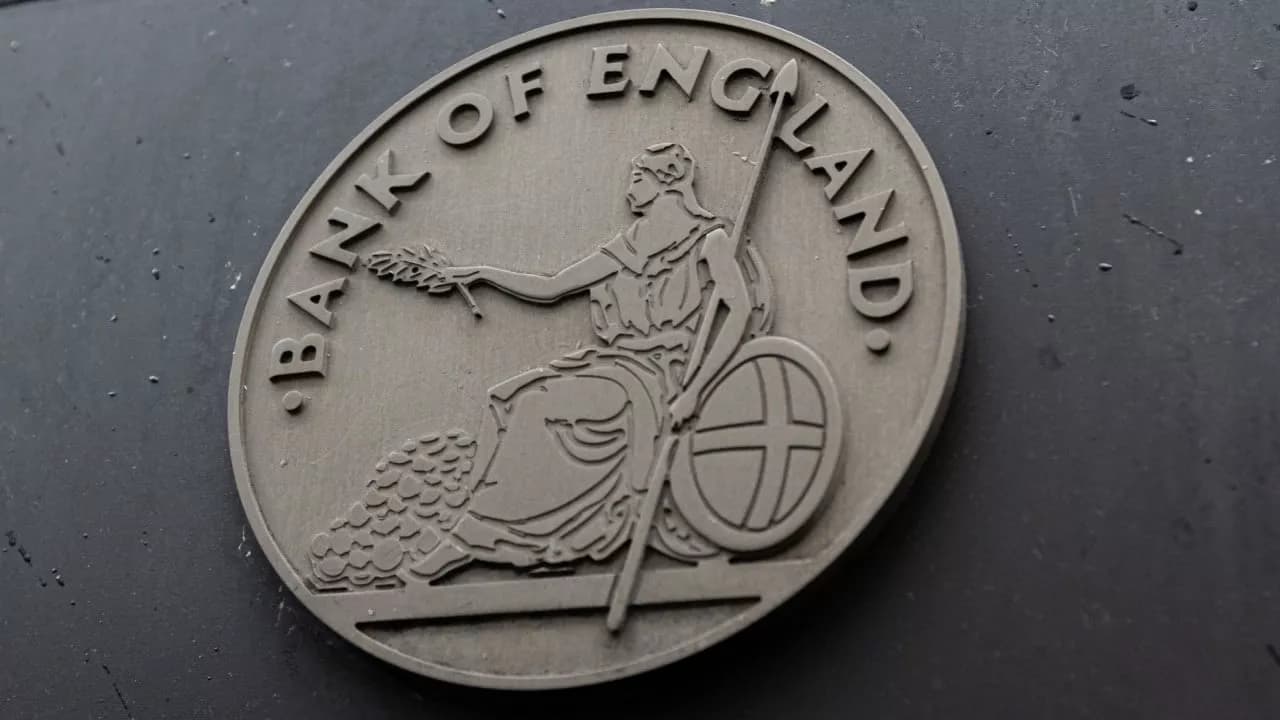
Bank of England Loosens Stance on Stablecoin Caps to Boost Digital Innovation
BoE plans stablecoin cap exemptions to encourage innovation while ensuring financial stability.
The Bank of England (BoE) is reportedly preparing to introduce exemptions to its forthcoming limits on stablecoin holdings, signaling a more flexible approach toward digital assets as the United Kingdom seeks to balance innovation with financial stability.
According to a Bloomberg report released Tuesday (Oct. 7), the BoE intends to allow cryptocurrency exchanges and select businesses to hold larger amounts of stablecoins than initially proposed. These exemptions would ease restrictions designed to limit exposure to digital tokens while the regulatory framework for stablecoins continues to evolve.
The new rules, expected by the end of the year, mark a notable shift in the central bank’s tone. Earlier proposals outlined strict ownership limits — individuals could hold between £10,000 and £20,000 (approximately $13,600 to $27,200), while businesses would face a ceiling of £10 million. The intention was to prevent widespread financial exposure before oversight mechanisms and robust reserves were established.
However, the crypto industry quickly pushed back. Companies, including major exchanges like Coinbase, argued that such stringent limits would leave the U.K. lagging behind its global peers. “Imposing caps on stablecoins is bad for U.K. savers, bad for the City and bad for sterling,” said Tom Duff Gordon, Coinbase’s Vice President of International Policy. “No other major jurisdiction has deemed it necessary to impose caps.”
The BoE appears to have taken note of these concerns. In addition to the planned exemptions, firms will reportedly be allowed to use stablecoins as a settlement asset within the Digital Securities Sandbox — a regulatory environment designed to test emerging technologies under real-world conditions. This will allow the central bank to observe how stablecoins function in financial markets as it refines its long-term regulatory approach.
The evolving policy underscores a growing recognition within the BoE that digital assets may play a legitimate role in the future of payments and settlements. Governor Andrew Bailey recently echoed this sentiment, saying it would be “wrong to be against stablecoins as a matter of principle.” He added that they could help “drive innovation in payments systems both at home and across borders.”
Still, Bailey cautioned that stablecoins should not be adopted uncritically. “It is possible, at least partially, to separate money from credit provision, with banks and stablecoins coexisting,” he said. “But it’s important to consider the implications of such a change thoroughly before going ahead.”
The BoE’s evolving stance may signal a pragmatic middle ground: one where innovation can proceed under measured supervision rather than blanket restriction. For the U.K., this could represent a crucial step toward becoming a global hub for digital finance — without sacrificing the regulatory rigor that underpins its financial reputation.