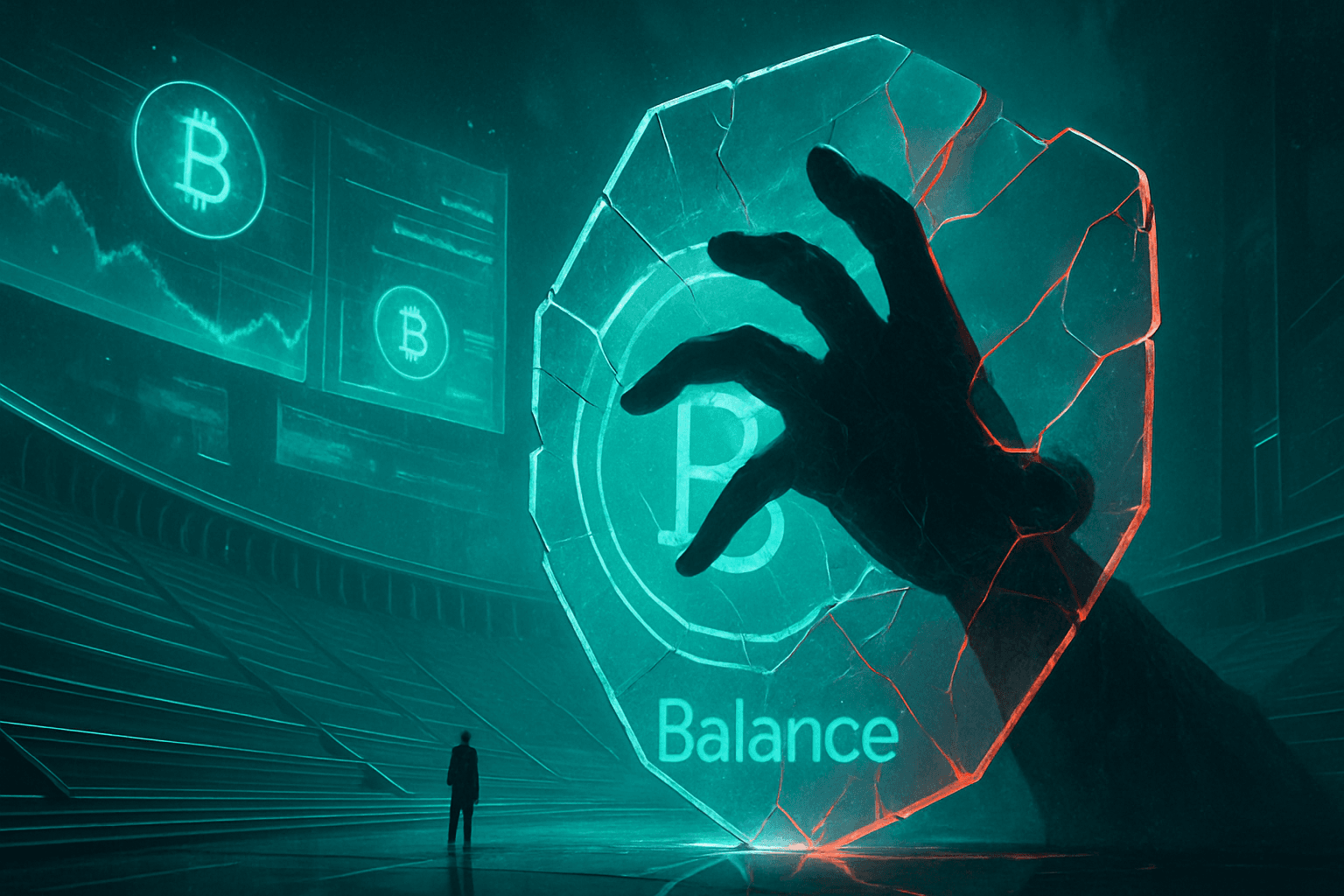
Balance Stablecoin Collapses 99% After Oracle Exploit Drains Bitcoin Vault
Balance Coin (BLC) collapsed approximately 99% on July 22 after an oracle exploit drained nearly $1 million in Bitcoin from the protocol's collateral vault in a single transaction. The attack exploited a governance vulnerability on 42DAO, the oracle service feeding price data to Balance's smart...
Balance Stablecoin Collapses 99% After Oracle Exploit Drains Bitcoin Vault
Balance Coin (BLC) collapsed approximately 99% on July 22 after an oracle exploit drained nearly $1 million in Bitcoin from the protocol's collateral vault in a single transaction.
The attack exploited a governance vulnerability on 42DAO, the oracle service feeding price data to Balance's smart contracts. A split-second failure in the price feed allowed an attacker to manipulate the protocol's collateral mechanism, triggering a complete drain of the Bitcoin vault. The entire exploit executed in one on-chain transaction, leaving BLC holders with tokens worth a fraction of their previous value.
The vulnerability lay in how Balance's governance layer interacted with the 42DAO oracle. The attacker did not need to exploit Bitcoin itself or compromise the underlying asset. Instead, they targeted the DeFi layer where Balance's smart contracts verify collateral and mint stablecoins. By briefly manipulating the oracle's price feed, the attacker could withdraw Bitcoin collateral as if the vault had been over-collateralized, a technique similar to flash loan attacks that have plagued other DeFi protocols.
Balance Coin had marketed itself as a Bitcoin-backed stablecoin, a category that has grown in popularity as traders seek on-chain dollar equivalents with hard asset backing. The protocol allowed users to deposit Bitcoin and mint BLC tokens at a 1:1 ratio, with governance mechanisms intended to prevent over-minting or collateral drains. Those safeguards failed to prevent the exploit.
The incident follows a pattern of oracle-layer vulnerabilities that have exposed fundamental weaknesses in DeFi infrastructure. The Poly Network hack in 2021 drained $611 million by exploiting cross-chain verification mechanisms. The Ronin bridge exploit in 2022 cost users $625 million through a similar governance attack. Flash loan exploits have repeatedly demonstrated that price oracles remain a critical vulnerability, even when protocols claim to have implemented safeguards.
Balance's collapse raises questions about the security of other Bitcoin-backed stablecoin protocols. Many rely on similar oracle architectures and governance structures to verify collateral and manage minting. If Balance's oracle integration was inadequately audited or lacked multi-signature controls on critical functions, other protocols using the same infrastructure may face similar risks.
The protocol's developers have not yet announced a recovery plan or governance response. In previous DeFi exploits, affected protocols have attempted to fork the contract, implement governance votes to freeze assets, or negotiate with attackers for partial fund recovery. None of those options guarantee user restitution, and token holders typically face significant losses even if recovery efforts succeed.
For Bitcoin itself, the exploit carries no direct implications. The underlying Bitcoin collateral is secure on the blockchain. The vulnerability existed entirely within Balance's smart contract layer and its reliance on external price data. This distinction matters for assessing systemic risk: the attack exposes weaknesses in how DeFi protocols integrate Bitcoin as collateral, not weaknesses in Bitcoin's consensus mechanism or security model.
The Balance collapse underscores a recurring lesson in DeFi security: collateral backing alone does not prevent protocol failure if the smart contract layer or oracle infrastructure is vulnerable. Protocols claiming Bitcoin backing must implement rigorous security audits, multi-signature governance controls, and circuit breakers that can halt transactions during anomalous price movements. Many do not.