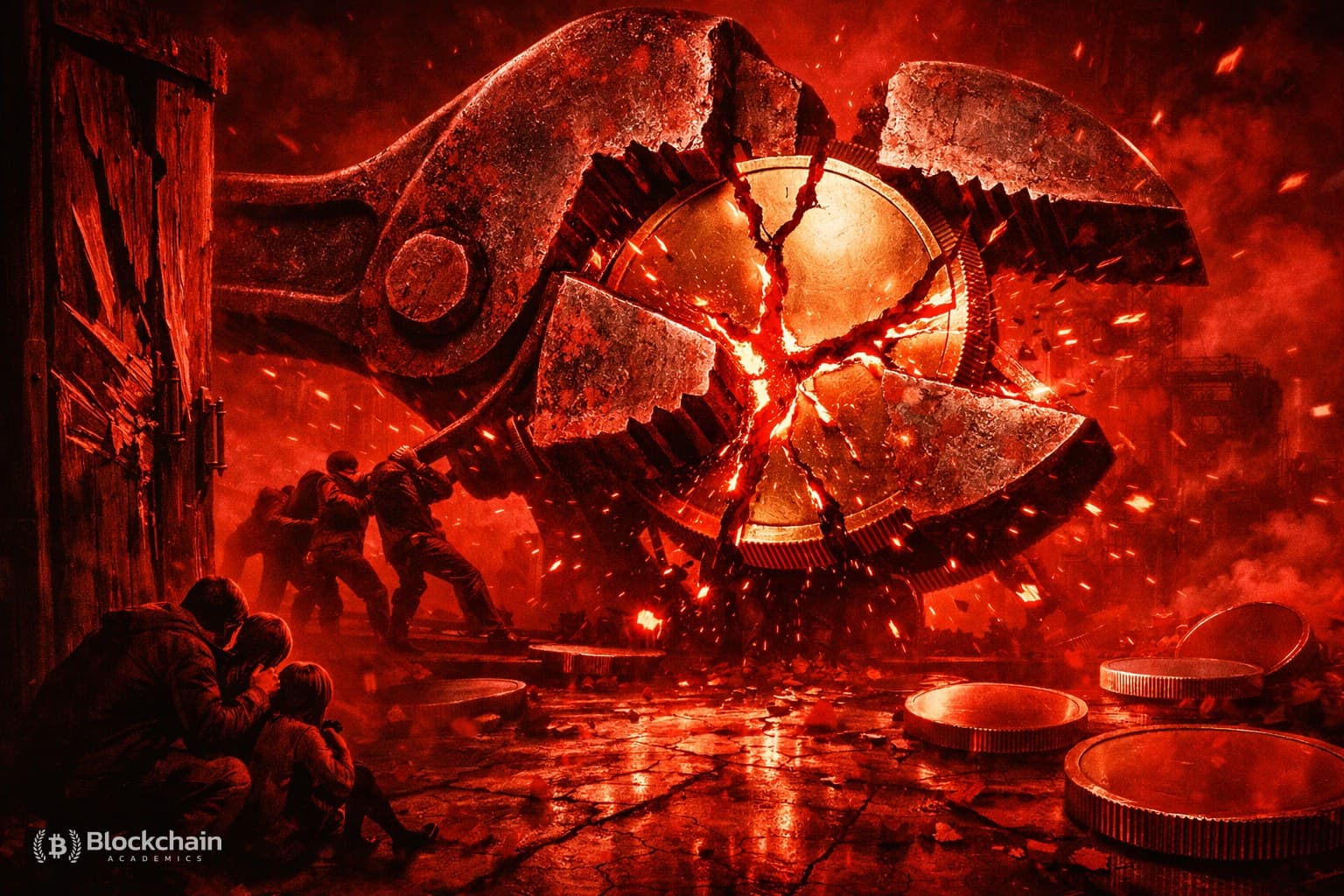
Armed Robbery in France Nets €40,000 in Crypto as Wrench Attacks Top 70 This Year
A family in Vendin-le-Vieil, France was held hostage for two hours while four armed men beat the father until he transferred approximately €40,000 in cryptocurrency. France has logged more than 70 wrench attacks in the first eight months of 2026 alone, making it the worst-affected country...
Armed Robbery in France Nets €40,000 in Crypto as Wrench Attacks Top 70 This Year
A family in Vendin-le-Vieil, France was held hostage for two hours this week while four armed men beat the father until he transferred approximately €40,000 (around $46,000) in cryptocurrency. A fifth attacker coordinated the operation by phone. The incident is the latest in a pattern of physical extortion targeting crypto holders that has made France the worst-affected country in the world for this category of crime.
The attack followed a now-familiar script. Criminals identify a target with known or suspected crypto holdings, force entry into the home, and use violence or the threat of violence against family members to coerce an immediate on-chain transfer. Because blockchain transactions are irreversible and pseudonymous, recovery of stolen funds is exceptionally difficult, making crypto holders a uniquely attractive target compared to victims of traditional bank fraud. Witness accounts from the Vendin-le-Vieil incident indicate the attackers spoke Arabic, though no arrests had been reported at the time of publication.
France has logged more than 70 so-called wrench attacks in the first eight months of 2026 alone. The term, borrowed from security researcher Jameson Lopp's long-running physical bitcoin attack database, refers to the use of physical coercion rather than technical exploits to steal digital assets. The French figure represents a significant escalation from prior years and points to organized criminal networks operating with a level of coordination well beyond opportunistic street crime. The five-person structure of the Vendin-le-Vieil attack, with dedicated roles for entry, coercion, and remote coordination, is consistent with that assessment.
The geography of these incidents matters. France has a relatively high rate of publicly known crypto wealth, a tight-knit community of early adopters concentrated in certain regions, and until recently, comparatively limited law enforcement infrastructure dedicated specifically to crypto-related violent crime. French authorities have made some arrests in connection with earlier attacks, and the national gendarmerie has increased coordination with financial intelligence units. Whether that response is scaling fast enough to match the pace of incidents remains an open question.
Security professionals have long argued that operational security, not just technical security, is the missing layer for retail crypto holders. Hardware wallets and self-custody protect against remote hacks; they do nothing against a masked intruder with a weapon. Mitigations that actually reduce wrench attack exposure include time-locked withdrawals, multi-signature wallet setups requiring co-signers who are not physically present, and avoiding any public disclosure of holdings. Some practitioners recommend holding a decoy wallet with a small balance specifically for coercion scenarios, a practice sometimes called a duress wallet. None of these measures are standard onboarding topics for new crypto users.
The Vendin-le-Vieil attack sits inside a documented, accelerating trend that France has been unable to reverse through the first three quarters of 2026. For self-custody advocates, the case reinforces that holding your own keys carries a physical security obligation that most wallet providers and exchanges do not communicate clearly. For policymakers, 70-plus violent crimes in eight months targeting a specific asset class is a number that demands a dedicated legislative and enforcement response, not just a general organized-crime framework. The irreversibility of crypto transactions, the feature that makes the asset class attractive to its users, is precisely what makes it attractive to criminals who understand that the clock is against recovery.