

Smart Contracts 101
A smart contract is a program that lives on a blockchain and runs exactly as written, every time, without any person or company needed to enforce it. When predetermined conditions are met, the contract executes automatically. No middleman, no paperwork, no waiting for a bank to o
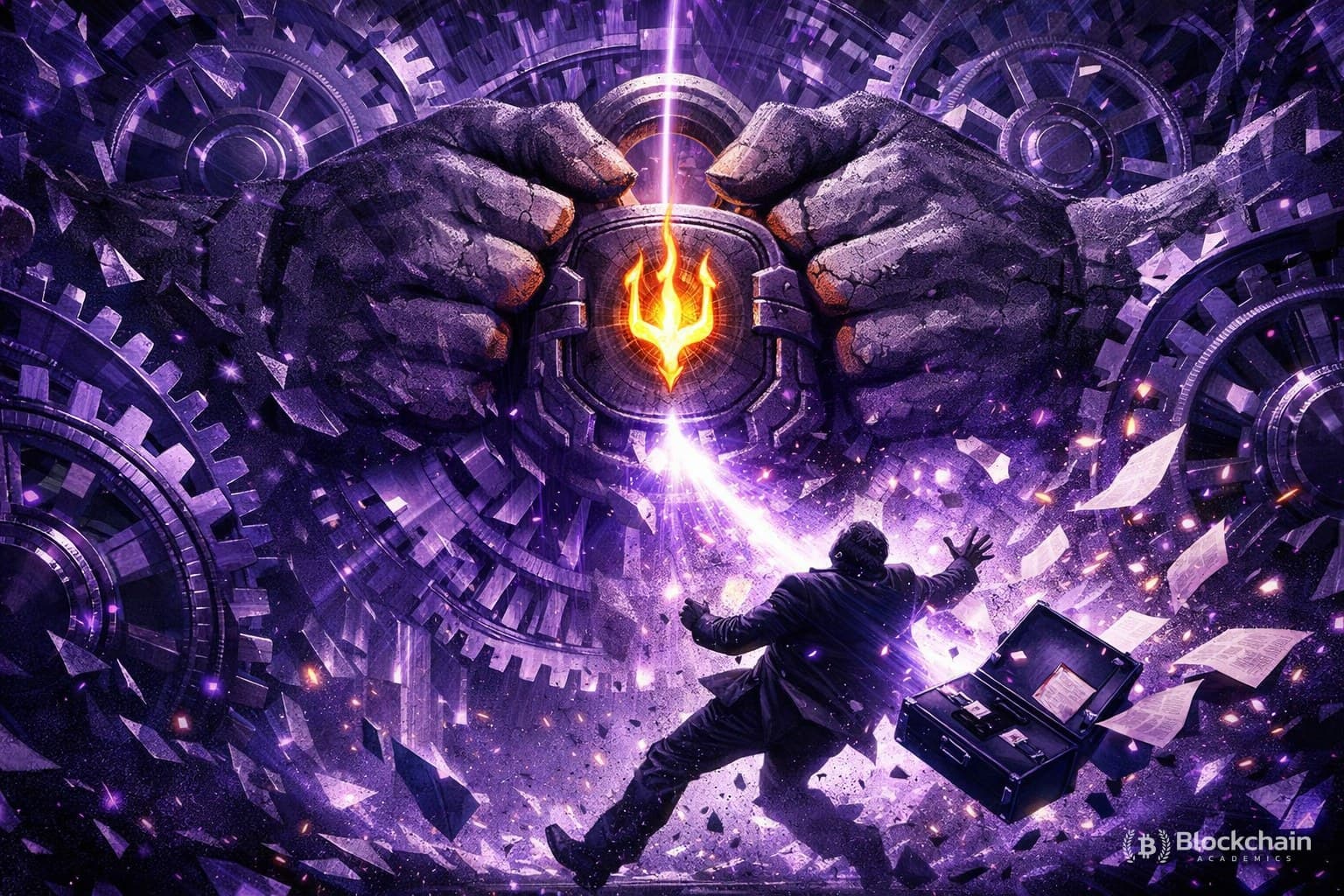
A smart contract is a program that lives on a blockchain and runs exactly as written, every time, without any person or company needed to enforce it. When predetermined conditions are met, the contract executes automatically. No middleman, no paperwork, no waiting for a bank to open on Monday morning.
That might sound like a narrow technical detail, but it changes something fundamental about how agreements work. Traditionally, contracts require trusted third parties to enforce them: banks, lawyers, courts, escrow services. Smart contracts replace that trust with mathematics. The code is the enforcement mechanism, and the blockchain is the record that nobody can quietly edit.
This makes them the core building block of Web3. Decentralized exchanges, lending platforms, NFT marketplaces, governance systems, and prediction markets are all, at their foundation, collections of smart contracts talking to each other.
What a Smart Contract Actually Is
Think of a vending machine. You insert money, press a button, and the machine delivers your snack. Nobody approves the transaction. The machine just follows its internal logic: if payment received AND item selected, then dispense item. A smart contract works the same way, except it runs on a blockchain instead of a metal box in a corridor.
More precisely, a smart contract is a piece of code deployed to a blockchain. Once deployed, it gets its own address, just like a wallet address, and anyone can interact with it by sending a transaction to that address. The code contains functions (specific actions the contract can perform) and state (data the contract stores and updates, like account balances or ownership records).
Here is a simple example. Suppose two people want to bet on whether a coin flip comes up heads. They could write a smart contract that:
- Accepts deposits from both players
- Waits for a random outcome from a trusted external source
- Automatically sends the combined pot to the winner
Once both players deposit, neither can alter the rules. Neither can stall. Neither can run off with the money. The contract holds the funds in escrow and executes the payout the instant the outcome is known. That determinism is the point.
How Smart Contracts Execute
Smart contracts on Ethereum (the network that popularized them) are written in a programming language called Solidity. When a developer writes a contract, they compile it into bytecode, a lower-level set of instructions that the Ethereum Virtual Machine (EVM) can read. The EVM is the runtime environment that every Ethereum node runs, ensuring every node processes the same code and reaches identical results.
When someone calls a function on a deployed contract, they send a transaction to the network. Every validating node executes that function independently, confirms the result matches, and updates the shared ledger. The output is deterministic: given the same inputs and the same contract code, every node will always compute the same answer. That agreement is what makes the result trustworthy without any central authority.
Execution is not free. Every operation inside a smart contract costs a small amount of computational work, measured in units called gas. Gas exists to prevent abuse: if code were free to run, someone could write an infinite loop and grind the whole network to a halt. Users pay gas fees in Ether (ETH), and those fees compensate the validators who do the computational work. More complex contracts, ones with more operations, cost more gas.
How Smart Contracts Power Web3
Once you understand that a smart contract is just an autonomous program holding funds and enforcing rules, the rest of Web3 starts to make sense.
A decentralized exchange (DEX) like Uniswap is a set of smart contracts that hold pools of tokens. When you swap one token for another, you are not trading with a person. You are interacting with a contract that calculates the exchange rate from the pool's balances and transfers tokens automatically. Uniswap's contracts have processed billions of dollars in volume without a company in the middle of each trade. Because that protocol operates through code rather than a central order book, it has attracted significant institutional attention, including futures products built around its governance token.
Lending protocols let users deposit collateral and borrow assets. The smart contract tracks your collateral ratio in real time. If your collateral's value drops too far, the contract automatically liquidates enough to repay the loan. No loan officer required, and no waiting.
NFTs (non-fungible tokens, meaning unique digital tokens rather than interchangeable ones) are managed by smart contracts that track which wallet owns which token and enforce royalty payments when tokens are resold.
Each of these applications is composable, meaning contracts can call other contracts. A single transaction might touch five different protocols in sequence, like stacking Lego bricks. This composability is why developers keep building on Ethereum rather than starting fresh elsewhere.
For a deeper look at how these pieces fit together, the BCA Academy covers Ethereum architecture, Solidity basics, and DeFi mechanics with structured courses.
Risks and Common Mistakes
Smart contracts are powerful precisely because they execute without human intervention. That same property is the source of their biggest risks.
Code bugs are permanent. A contract deployed to a blockchain cannot be silently patched. If the code contains a flaw, an attacker can exploit it, often draining funds within minutes. In the 2016 DAO hack, a reentrancy vulnerability (a coding pattern that let an attacker repeatedly withdraw funds before the contract updated its balance) led to the loss of tens of millions of dollars in ETH at the time. Auditing contracts before deployment is standard practice, but no audit guarantees perfection.
"Immutable" does not always mean unchangeable. Many contracts include admin keys or upgrade mechanisms that allow developers to modify the logic later. This is sometimes necessary for bug fixes, but it also means users are trusting whoever holds those keys. Always check whether a contract is truly immutable or has an owner who can change it.
Oracles introduce external risk. Smart contracts cannot read the outside world on their own. They use oracles, services that feed external data onto the blockchain, for things like asset prices or sports scores. If an oracle is manipulated or goes offline, contracts depending on it can malfunction badly. Several major DeFi hacks have exploited oracle manipulation rather than the contract code itself.
Beginners often assume that because a contract is "on the blockchain," it is automatically safe or legitimate. It is not. Anyone can deploy any contract. Scammers routinely launch contracts that look like real protocols but are designed to steal funds on withdrawal. Always verify you are interacting with an audited, officially linked contract address, not a copycat.
Frequently Asked Questions
Are Smart Contracts Legally Binding?
Smart contracts execute code automatically, which is different from legal enforceability in a court. Some jurisdictions have passed laws recognizing smart contracts as legally valid agreements, but the legal status varies by country and context. In practice, many smart contracts operate effectively because both parties want what the contract provides, not because a court would enforce it.
Can a Smart Contract Be Hacked?
The blockchain itself is extremely difficult to attack, but the contract code sitting on top of it can contain vulnerabilities. Attackers do not need to break the blockchain; they just find flaws in the logic and exploit them through normal transactions. This is why security audits and formal verification matter enormously before a contract handles significant value.
What Is the Difference Between a Smart Contract and a Regular App?
A regular app runs on servers controlled by a company. The company can take it down, change its rules, or freeze your account. A smart contract runs on a decentralized network of nodes. No single company controls it, and it executes according to its code regardless of what any individual or organization wants. The trade-off is that mistakes in the code are much harder to fix.
Do Smart Contracts Only Exist on Ethereum?
No. Many blockchains support smart contracts, including Solana, BNB Chain, Avalanche, Cardano, and others. Most use their own virtual machines and programming languages, though many are compatible with the EVM and Solidity. Ethereum remains the largest ecosystem by developer activity and total value held in contracts, which is why it is usually where the concept gets introduced.